The EU’s Brain Drain Crisis: Poland’s Talent Exodus
- Post by: Hammad Ramzi
- February 28, 2026
- No Comment
Julia Lasiota, Stanford University
Abstract: This essay examines how EU freedom of movement has created a damaging brain drain from Central and Eastern European countries to wealthier Western states. Using Poland as a case study—where fewer than half the author’s graduating class remained—the piece argues this westward talent exodus causes labor shortages, reduces GDP growth, and threatens EU unity by deepening regional disparities. The author proposes redirecting EU cohesion funds toward the development research hubs and startup ecosystems in CEE countries, along with scholarships and tax incentives to encourage professionals to return, arguing that true European unity requires ensuring that young people can thrive anywhere, rather than just the freedom to leave.
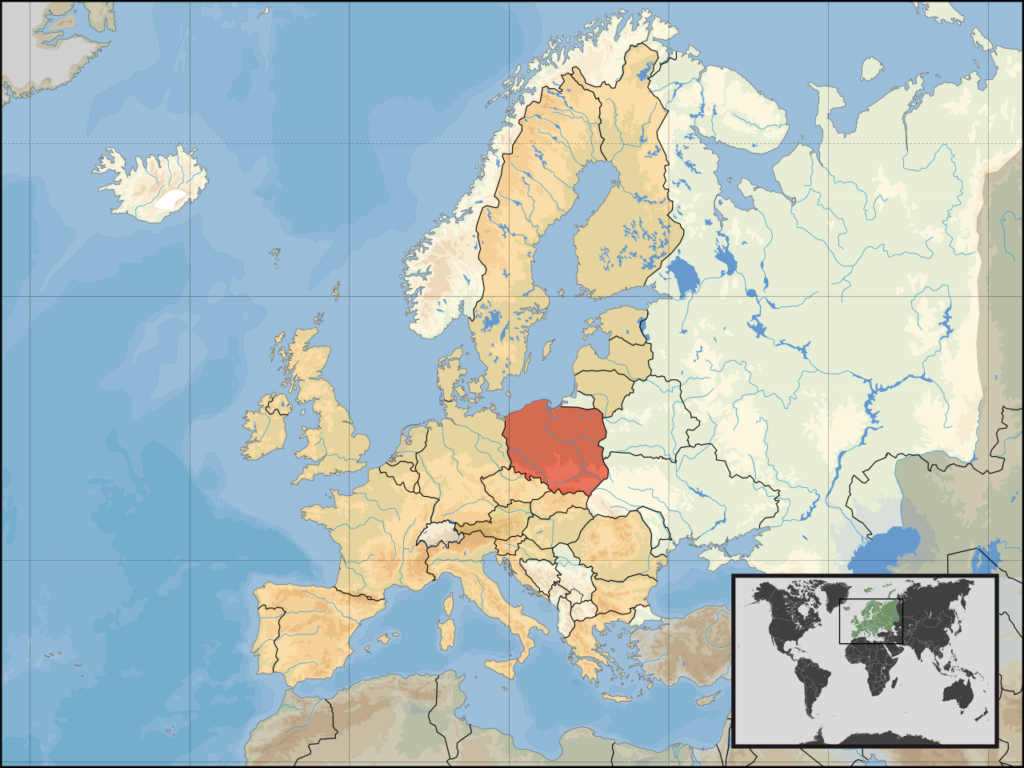
My graduating class of twenty-six students saw roughly half remain in Poland after earning their diplomas. For a high school in Łódź, a formerly industrial city in central Poland, that statistic equaled success. It attracted parents hopeful to see their children succeed internationally and boosted the school’s standing in city and national rankings. What seemed like a remarkable achievement for a school in Łódź, however, has become the norm for top high schools in wealthier cities like Warsaw, Kraków, or Gdańsk.
Students who grew up after Poland’s 2004 EU accession dream big. The world, or rather the EU, is truly their oyster. What once seemed like wishful thinking reserved for the ultra wealthy—studying abroad or pursuing careers in major European capitals—is now within the reach of all thanks to EU membership. Like most other members of the EU participating in the Schengen Area, Polish students and professionals can move freely within the Union, benefiting from the same tuition rates, loans, and support as local citizens. This opens doors to higher salaries in Western Europe, placements at world-renowned universities abroad, and professional networks that can transform a career trajectory. But there are two sides to that coin.
While Poland, along with other Central and Eastern European (CEE) countries, has prospered from EU membership, becoming the sixth-largest economy in the EU and among the twenty largest in the world, it now faces a slow-burning crisis: persistent brain drain. This weakens national economies and reduces human capital, undermining the EU’s foundational goals of shared prosperity and unity, especially when the top talent wants to spread its wings elsewhere.
On the surface, the proportion of CEE students pursuing higher education in other EU countries might seem like a drop in the bucket. But the migration patterns tell a different story: when Poland joined the EU in 2004, millions jumped at the opportunities offered by freedom of movement. By 2007, more than 2.3 million Poles were living abroad, most residing in wealthier Western European states. Such a pattern was not unique to Poland. Bulgaria, Romania, and other CEE countries experienced similar waves of emigration. The consequences are hard to ignore. The exodus of talent has caused labor shortages in crucial sectors such as healthcare and technology, slowing economic growth in the region. For instance, the Romanian College of Physicians reported that more than 4,000 doctors have emigrated since 2007, representing almost 10% of doctors in the country.
The issue has even been seized by populists. In the run-up to May 2025 presidential elections, eurosceptic and far-right candidate Sławomir Mentzen proposed imposing tuition fees on higher education. Mentzen argues that free education, especially in fields like medicine, effectively subsidizes students who later emigrate, thereby taking taxpayer investments abroad with them. Whether such a proposal truly merits consideration is another debate. But Mentzen’s rhetoric is not groundless: despite the fact that Poland now trains over twice as many doctors as it did 25 years ago, medical professionals remain in chronic shortage. Universities struggle to accommodate rising numbers of medical students, yet hospitals remain understaffed. This gap is explained by, among other factors, the outflow of medical graduates to the West.
But this brain drain is not just a Polish problem—it is a European one. Latvia has lost nearly a third of its population since 1991, while Lithuania ranks among the ten fastest-shrinking countries in the world. Brain drain—and an aging population—are largely to blame for these decreases. The International Monetary Fund estimates that emigration alone has reduced private sector activity across Central, Eastern, and Southeastern Europe, lowering potential GDP growth by at least 0.6% per year. Additionally, with fewer young taxpayers remaining in countries like Poland or Latvia that are already experiencing steep demographic decline, the strain on national pension systems worsens.
Some may argue that migration is a choice, enabled by one of the fundamental freedoms that the EU provides. This is true. But when freedom becomes a one-way ticket westward, differences in societal outcomes among member states become inevitable. A Union that leaves its eastern members deprived of domestic talent cannot thrive; regional disparities foster resentment and erode pro-European sentiments, risking the future unity of the bloc.
Maintaining this status quo also feeds into populist and nationalist narratives that portray the EU as an inherently unequal structure and an organization unfit to meet the challenges of a rapidly changing geopolitical reality. If the EU truly believes in unity and shared prosperity, it must confront the imbalances that drive the youngest and brightest westward—or risk deepening the very divides the Union was meant to bridge. The EU has the means to act: €392 billion—nearly a third of the entire EU budget for 2021-2027— is allocated to its cohesion policy, a scheme designed explicitly to reduce regional disparities. Given these resources, EU lawmakers could implement two policies to reverse this brain drain.
First, the EU must rethink how it deploys its cohesion funds. These funds, which transfer money from wealthier member states to less developed regions, have traditionally prioritized roads and infrastructure. But future-proof investments such as national research hubs or startup ecosystems would give young CEE talent compelling professional reasons to stay or return.
Second, the EU should launch a scheme offering scholarships, grants, and coordinated tax incentives to encourage young professionals to bring their skills back to the member states affected most severely by westward emigration. This would not require increased spending, and could instead be funded through a modest reallocation of existing cohesion funds toward these investments in human capital.
The concept of labor mobility must move beyond guaranteeing the freedom to leave and should instead cultivate the freedom to thrive anywhere. Returning to one’s home country should feel as attractive as moving away, and the key to achieving that is ensuring that opportunities at home can match those abroad. I believe in the promise of the European Union: that no matter where you are born, you have the chance to live where you feel most at home. However, I also believe that no young person should feel forced to choose between ambition and belonging. For many of my classmates, leaving Poland was not a choice made lightly but one that seemed to maximize their potential. If the EU fails to nurture opportunities more equally across the member states, it risks becoming a union in name only, fracturing its future in the process.